Muffler Man of Portage has proudly served Portage, Kalamazoo, Oshtemo, and nearby Michigan communities since 2002. As a family-owned auto repair shop, the team specializes in mufflers, exhaust systems, brakes, suspension repair, diagnostics, and general automotive services. With certified technicians, advanced diagnostic tools, and a commitment to honest service, Muffler Man of Portage delivers reliable automotive repair solutions backed by years of hands-on industry experience
That little amber light on your dashboard can feel alarming. One moment your drive is fine, and then, there it is, glowing right at you. But here is the thing: a check engine light on does not always mean your car is about to break down. It means your vehicle's onboard computer, called the OBD-II system, has picked up something worth checking.
We have seen drivers ignore that light for months and end up with a much bigger repair bill. We have also seen drivers panic over a loose gas cap. The truth usually sits somewhere in between. Understanding the most common causes helps you make a smarter call, faster.
At a Glance: Top 10 Check Engine Light Causes
| S. No. | Causes | Urgency Level |
|---|---|---|
| 1 | Loose or faulty gas cap | Low |
| 2 | Oxygen sensor failure | Medium |
| 3 | Catalytic converter issue | Medium-High |
| 4 | Mass airflow sensor fault | Medium |
| 5 | Spark plug or ignition coil problem | Medium |
| 6 | Battery or charging system issue | Medium |
| 7 | EVAP system leak | Low-Medium |
| 8 | Thermostat failure | Medium-High |
| 9 | EGR valve problem | Medium |
| 10 | Transmission issue | High |
What Are the Most Common Reasons a Check Engine Light Comes On?
1. Loose or Faulty Gas Cap
This is one of the most common triggers, and also the easiest fix. Your gas cap seals the fuel system and keeps vapors from escaping. When it is loose, cracked, or missing, the EVAP system detects a pressure drop and flags it. Tighten your gas cap, drive a few miles, and see if the light clears.
2. Failing Oxygen Sensor
Your car has oxygen sensors that monitor how much unburned oxygen is in the exhaust. When a sensor starts to fail, your engine runs on the wrong fuel-to-air ratio. This hurts fuel economy and, over time, can damage your catalytic converter. This is a job for the check engine light diagnostics at a shop.
3. Catalytic Converter Problem
The catalytic converter cleans up harmful gases before they leave your exhaust. A failing converter usually triggers a code alongside a failed oxygen sensor. You may also notice reduced acceleration or a rotten-egg smell. Ignoring this leads to higher costs and can even cause your car to fail emissions testing.
4. Mass Airflow Sensor Failure
The mass airflow (MAF) sensor measures how much air enters the engine. A dirty or failing sensor sends bad data to the engine control module. This leads to poor fuel economy, rough idling, and stalling. A clogged air filter can sometimes cause this, so that is worth checking first.
5. Spark Plugs or Ignition Coil Issues
Worn spark plugs cause misfires. Misfires mean your engine is not burning fuel cleanly. You might feel the car shake, hesitate when accelerating, or notice worse gas mileage. Replacing spark plugs on schedule prevents this entirely, making it one of the most preventable triggers on this list.
6. Battery or Charging System Fault
A weak battery or a failing alternator can cause the check engine light to come on, especially in newer vehicles with more electronics. If your car is also slow to start or your lights seem dim, your charging system needs attention.
7. EVAP System Leak
Your car's evaporative emission control (EVAP) system prevents fuel vapors from leaking into the air. A small leak anywhere in the system, including hoses and valves, triggers a code. This one is not always urgent, but it should not be ignored for long since it affects emissions compliance.
8. Thermostat Failure
Your engine thermostat regulates operating temperature. If it fails, your engine can run too cold or too hot. Both are bad. Overheating in particular can cause serious engine damage in a short amount of time. If your temperature gauge is also acting up, treat this as urgent.
9. EGR Valve Problem
The exhaust gas recirculation (EGR) valve reduces emissions by recirculating some exhaust back into the engine. When it gets clogged or fails, your engine performance drops and emissions spike. This is more common in higher-mileage vehicles.
10. Transmission Issue
Some transmission problems trigger the check engine light before you notice any driving symptoms. Slipping gears, delayed shifts, or hard shifts alongside the light mean you should get to a shop quickly. Transmission repairs are expensive when delayed. Catching them early saves you real money.
How to Tell If Your Check Engine Light Is Serious
Not every check engine light means an emergency, but some situations require immediate attention.
Steady Check Engine Light
A steady light usually indicates a non-urgent issue such as a faulty sensor, loose gas cap, or emissions-related problem. Your vehicle may still drive normally, but you should schedule a diagnostic inspection soon to prevent further damage.
Flashing Check Engine Light
A flashing light is much more serious. It often indicates an active engine misfire that can quickly damage the catalytic converter. If the light is flashing, reduce speed, avoid hard acceleration, and have the vehicle inspected immediately.
Check Engine Light with Performance Problems
If the light appears along with rough idling, stalling, loss of power, unusual noises, overheating, or transmission issues, stop driving as soon as it is safe and have the vehicle evaluated by a professional technician.
What Should You Do When the Check Engine Light Comes On?
When the check engine light appears, follow these simple steps:
- Check that your gas cap is tightened properly.
- Pay attention to any changes in vehicle performance.
- Look for other warning lights on the dashboard.
- Avoid aggressive driving and heavy towing.
- Schedule professional diagnostics as soon as possible.
Modern vehicles store diagnostic trouble codes (DTCs) that help technicians identify the source of the problem. Reading these codes is the fastest way to determine whether the issue is minor or requires immediate repair.
Why You Should Never Ignore a Check Engine Light
Many drivers continue driving for weeks or even months after the light appears. While some causes are minor, ignoring the warning can lead to:
- Reduced fuel efficiency
- Increased emissions
- Poor engine performance
- Costly catalytic converter damage
- Engine overheating
- Transmission failure
- More expensive repairs later
A simple repair that costs a few dollars today can turn into a repair costing hundreds or even thousands if left unresolved.
How Professional Engine Diagnostics Work
At a professional repair shop, technicians connect advanced diagnostic equipment to your vehicle's onboard computer. This allows them to:
- Retrieve diagnostic trouble codes
- Analyze live engine data
- Test sensors and electrical components
- Identify hidden performance issues
- Confirm the exact cause of the warning light
Accurate diagnostics eliminate guesswork and help ensure repairs are completed correctly the first time.
Signs You Should Schedule Diagnostics Right Away
Do not wait to have your vehicle inspected if you notice any of these symptoms:
- Flashing check engine light
- Engine misfires or shaking
- Loss of acceleration
- Poor fuel economy
- Burning smells
- Excessive exhaust smoke
- Hard shifting transmission
- Engine overheating
These symptoms often indicate problems that can worsen quickly if ignored.
Get Your Check Engine Light Diagnosed by Experts You Can Trust
If that light is still on, do not guess. Bring your vehicle to Muffler Man in Portage, MI. Our certified technicians use advanced engine diagnostics service to pinpoint exactly what your car needs, fast. Whether it is a sensor swap, exhaust system repairs, or something more involved, we offer transparent pricing and a 24-month/24,000-mile warranty on qualifying work. We are your go-to for trusted automotive repair services in Portage.
Stop searching for the nearest auto repair shop and head to a team that has been serving this community for over 20 years. Call us at (269) 323-1980 or visit us at 106 East Centre Avenue, Portage, MI 49002. Schedule your appointment today and let us take it from there.
Frequently Asked Questions
What are the most common reasons a check engine light comes on?
The most common causes are a loose gas cap, a failing oxygen sensor, a bad catalytic converter, and worn spark plugs. These four account for the majority of check engine codes in everyday vehicles.
Can I drive with my check engine light on?
If the light is steady and the car feels normal, short-distance driving is usually okay. If the light is flashing or the car is driving differently, stop driving and get it checked right away.
What does a flashing check engine light mean?
A flashing light signals an active engine misfire. This is urgent because it can destroy the catalytic converter quickly. Do not keep driving. Get the car to a shop or call for a tow.
Will a loose gas cap trigger a check engine light?
Yes. A loose or damaged gas cap breaks the seal on the fuel vapor system and can turn on the check engine light. Re-tighten the cap and drive a few cycles to see if it clears.
Can low oil cause the check engine light to come on?
Usually not directly, but very low oil pressure can trigger related codes in some vehicles. Always check your oil level when any warning light appears on your dashboard.


Learn the common signs and causes of radiator problems, explore repair options, and discover when to seek professional help to prevent engine overheating and costly damage.

Learn how to extend the life of your transmission with essential maintenance tips, proper driving habits, and early warning signs to watch for.
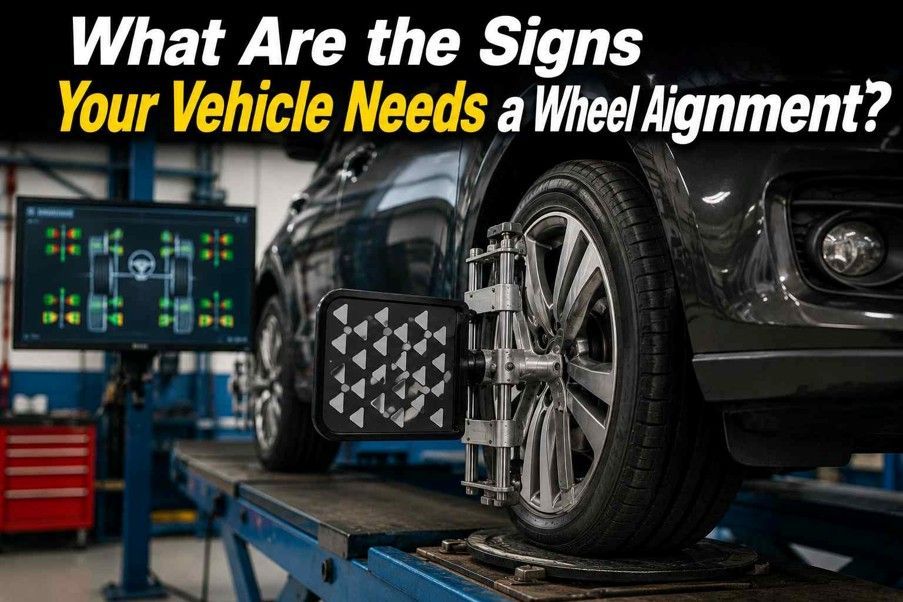
Learn the signs your vehicle needs a wheel alignment, including uneven tire wear, pulling, steering issues, and an off-center steering wheel.
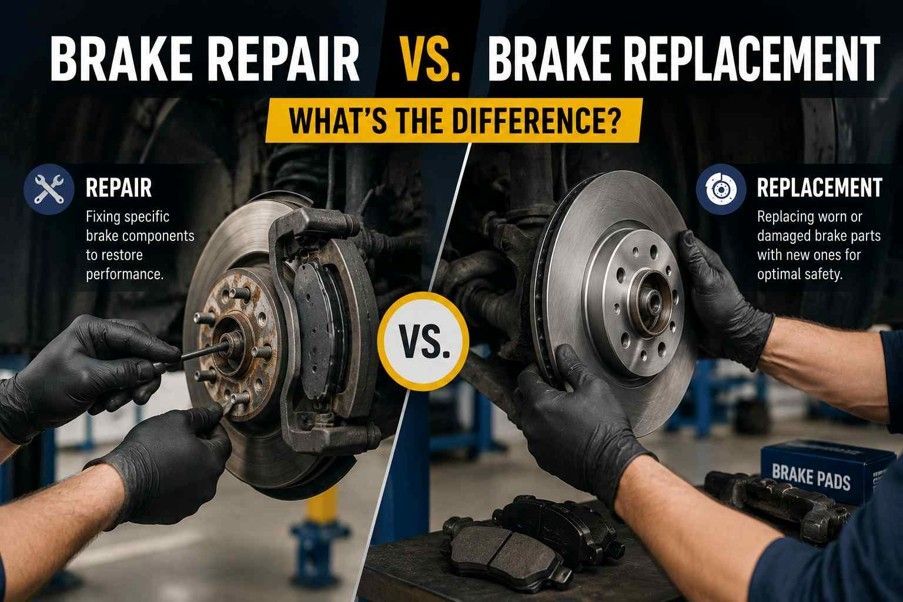
Learn the difference between brake repair and brake replacement, when each option may be needed, and the warning signs that your vehicle's brakes need attention.
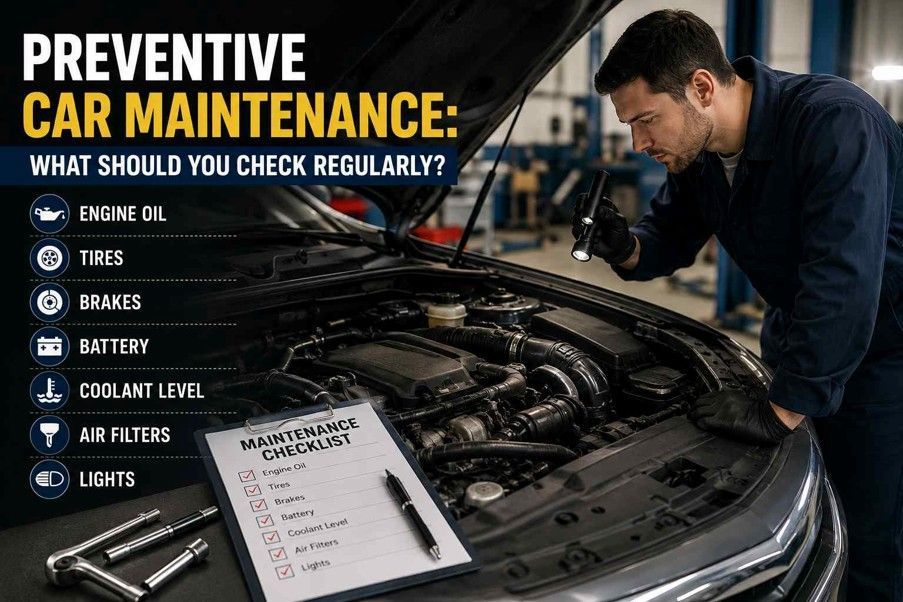
Learn what to check regularly with preventive car maintenance, including fluids, brakes, tires, batteries, and other key components to help avoid costly repairs.
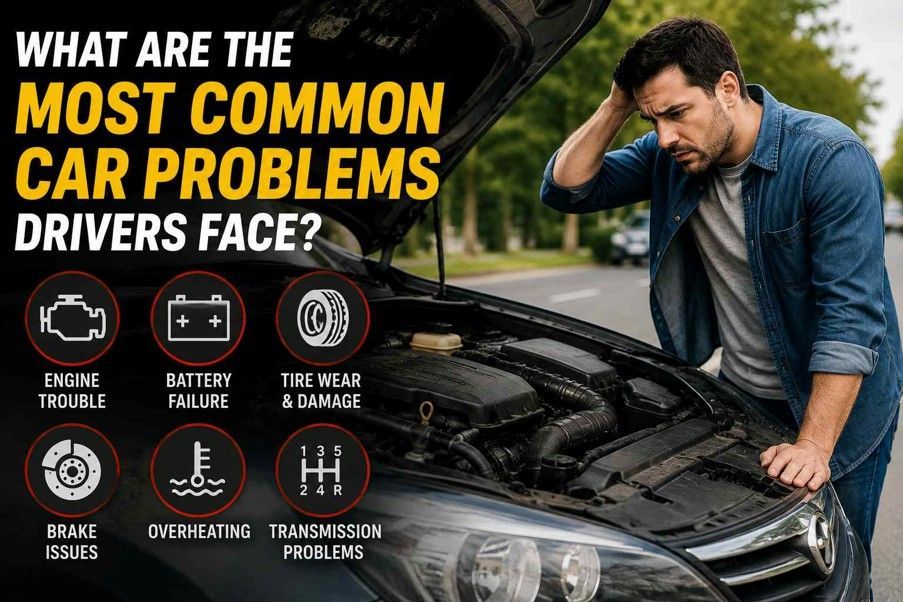
Discover the most common car problems drivers face, from brake and battery issues to engine, tire, and transmission problems, plus signs to watch for.
Why is your car losing power while accelerating? Learn the common causes, warning signs, and when to seek professional auto repair to restore performance.
Learn why your transmission is slipping, common causes, warning signs, repair options, and when to seek professional transmission repair.
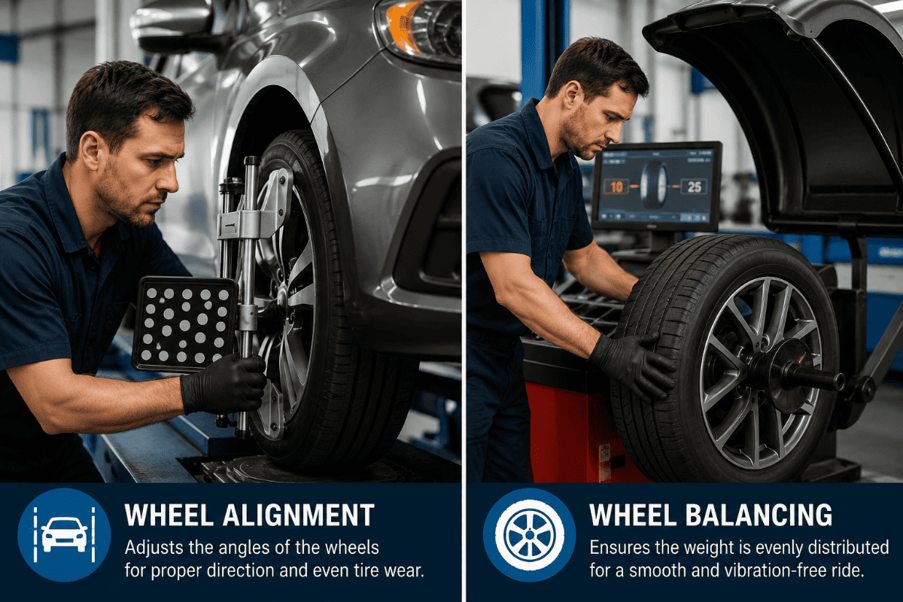
Learn the difference between wheel alignment and wheel balancing, common warning signs, key benefits, and when each service is needed for safer driving.

Learn why brake inspections before long road trips are essential. Discover warning signs, inspection tips, and how to keep your vehicle safe on every drive.