Muffler Man of Portage has proudly served Portage, Kalamazoo, Oshtemo, and nearby Michigan communities since 2002. As a family-owned auto repair shop, the team specializes in mufflers, exhaust systems, brakes, suspension repair, diagnostics, and general automotive services. With certified technicians, advanced diagnostic tools, and a commitment to honest service, Muffler Man of Portage delivers reliable automotive repair solutions backed by years of hands-on industry experience
You press the gas pedal and wait. The car should surge forward, but it feels slow, weak, or almost lazy. Car losing power when accelerating is one of the most common complaints drivers bring to a repair shop, and it can point to several different problems under the hood. This feeling is more than an annoyance. It can make merging or passing on the highway unsafe. Once you understand what causes it, the fix usually becomes much clearer.
What Power Loss Actually Feels Like?
Not every power loss issue feels the same. Some drivers notice a slow build-up of speed. Others feel a sudden jerk or stumble the moment they press the pedal. Here are a few common patterns:
● The car hesitates, then catches up a second late
● Acceleration feels slow, especially uphill or with passengers
● The engine revs high, but speed doesn't match
● Power comes and goes without warning
● A check engine light appears, sometimes flashing
Paying attention to when this happens gives useful clues. Does it happen only under hard acceleration? Only at certain speeds? Only when the AC is running? These small details often point straight to the cause.
Common Causes of Poor Car Acceleration
There are several common causes of poor car acceleration, and most fall into one of a few categories. We'll walk through each one so you know what your car might be telling you.
1.Fuel Delivery Problems
Your engine needs a steady stream of fuel to build power. When you press the gas, fuel demand jumps fast. If the fuel system can't keep up, power drops right when you need it most.
A weak fuel pump, a clogged fuel filter, or a failing fuel injector can all cause this. The engine may run fine at idle but struggles the moment you ask for more speed. This is often confirmed through fuel pressure testing, which checks whether fuel supply drops under load.
2.Ignition Issues
This is one of the most common reasons drivers ask: why does my car hesitate when accelerating? Worn spark plugs or a weak ignition coil can handle idle just fine, then fall apart once the engine works harder.
Cylinder pressure rises sharply during acceleration. If the spark isn't strong enough, combustion becomes uneven. You might feel a shake, a stumble, or a rough patch right as you press the pedal.
3.Airflow Restrictions
Engines need air just as much as fuel. If airflow is blocked, the engine can't breathe properly, and power suffers. A dirty air filter, a clogged throttle body, or a faulty airflow sensor can all restrict how much air reaches the engine. This often causes the engine to lack power during acceleration, especially at higher RPM, where airflow demand is greatest.
4.Exhaust Restrictions
Exhaust gases need a clear path out of the engine. When that path narrows, usually due to a clogged catalytic converter, the engine has to work harder to push exhaust out. This drains power fast. This cause tends to get worse the harder you accelerate. Drivers sometimes notice a hot smell, poor fuel economy, or a car that simply won't rev the way it used to.
5.Sensor and Computer Issues
Modern cars rely on sensors to calculate the right mix of fuel, air, and spark timing. If one sensor sends bad information, the engine computer can make the wrong call, even when the parts underneath are healthy. Common culprits include the mass airflow sensor, oxygen sensor, or throttle position sensor. This is a frequent reason a car feels weak when pressing the accelerator, even though nothing looks obviously broken.
6.Transmission or Drivetrain Trouble
Sometimes the engine is making plenty of power, but that power never reaches the wheels correctly. A slipping transmission, a failing torque converter, or clutch wear can all cause this.
A telltale sign is when engine RPM climbs, but the car's speed doesn't increase at the same rate. This points away from the engine and toward the drivetrain.
Read More : Why Is My Transmission Slipping?
Quick Reference: Symptom to Likely Cause
| What You Notice | Likely System |
|---|---|
| Fine at idle, weak under load | Fuel delivery |
| Shaking or stumbling under acceleration | Ignition |
| Choked feeling at high RPM | Airflow |
| Worsens the harder you push, hot smell | Exhaust restriction |
| Intermittent, comes with odd idle | Sensors |
| RPM rises but speed doesn't match | Transmission |
How Do Mechanics Diagnose a Car That Is Losing Power?
How do mechanics diagnose a car that is losing power? The process usually follows a clear order, moving from the easiest checks to the more involved ones.
Step 1: Review the symptoms
We start by asking when the power loss happens, whether the check engine light is on, and if the car shakes or smells unusual.
Step 2: Scan for codes
Even without a warning light, most cars store data on misfires, fuel trim, and sensor readings. This narrows the search quickly.
Step 3: Test fuel delivery
We check fuel pressure at idle and under load to see if it drops when the engine demands more fuel.
Step 4: Inspect ignition parts
Spark plugs and coils get checked for wear, damage, or signs of misfire.
Step 5: Check airflow and exhaust
We look for intake leaks, a dirty throttle body, or signs of a restricted catalytic converter.
This step-by-step approach, offered through advanced engine diagnostics service, helps avoid guesswork and unnecessary part replacement.
Why You Shouldn't Wait to Get It Checked?
Power loss rarely stays the same. It tends to get worse over time, and the longer it goes unchecked, the more expensive the fix can become.
A misfire left alone can overheat and damage the catalytic converter. A fuel delivery problem can leave you stranded with no warning. Transmission slip tends to accelerate wear once it starts. Small issues can multiply into bigger ones if you keep driving through them.
Bring Your Car to Muffler Man for a Real Diagnosis
If your car is hesitating, bogging down, or struggling every time you press the gas, we'd rather find the real cause than have you guess and replace parts one at a time. At Muffler Man, we use proper testing to trace power loss back to fuel delivery, ignition, airflow, exhaust, or drivetrain issues, then walk you through exactly what your car needs. As engine repair experts near you, we've built our reputation as a trusted auto repair shop in Portage by giving straight answers instead of guesswork. Stop by or schedule your visit, and let's get your car pulling the way it should again.
FAQs
Why is my car losing power when accelerating?
Your engine needs the right balance of air, fuel, and spark to build power. When one part falls short under load, usually fuel delivery, ignition, or airflow, the car feels weak or slow to respond.
What causes a car to lose power while accelerating?
The most common causes are fuel delivery issues, worn ignition parts, restricted airflow, a clogged exhaust, faulty sensors, or a slipping transmission. A proper scan usually narrows it down fast.
Why does my car hesitate or jerk when accelerating?
Hesitation often points to ignition trouble, like worn spark plugs or a weak coil. It can also mean a sensor is sending bad data, causing the engine to misjudge fuel and timing.
Can bad spark plugs cause a car to lose power when accelerating?
Yes. Worn spark plugs may work fine at idle but fail once cylinder pressure rises during acceleration. This often causes stumbling, misfires, or a noticeable drop in power.
Can a clogged catalytic converter cause a loss of power?
Yes. A restricted converter blocks exhaust from leaving the engine efficiently. This forces the engine to work harder, and power loss tends to worsen the more you accelerate.

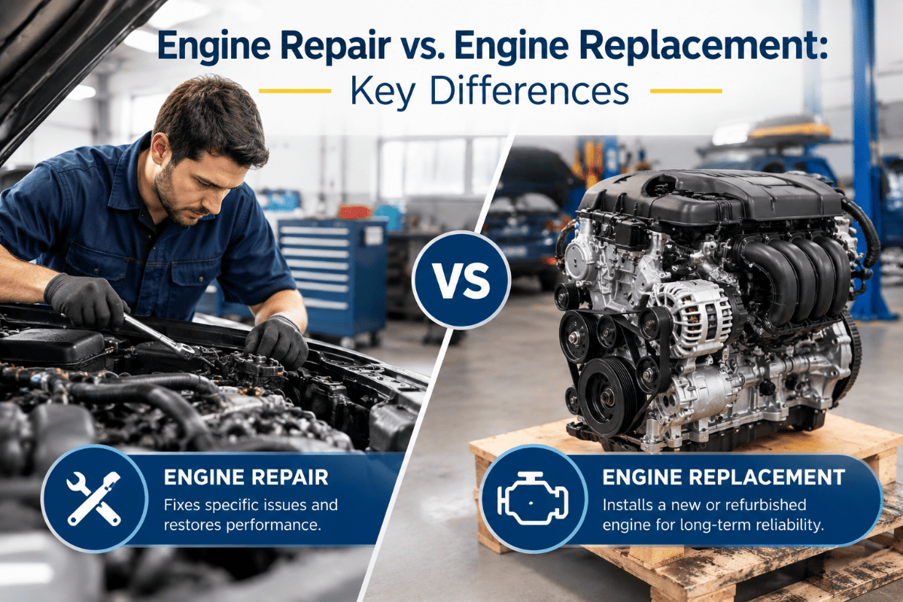
Compare engine repair vs. replacement, including costs, warning signs, benefits, and timelines. Get expert engine diagnostics at Muffler Man of Portage.
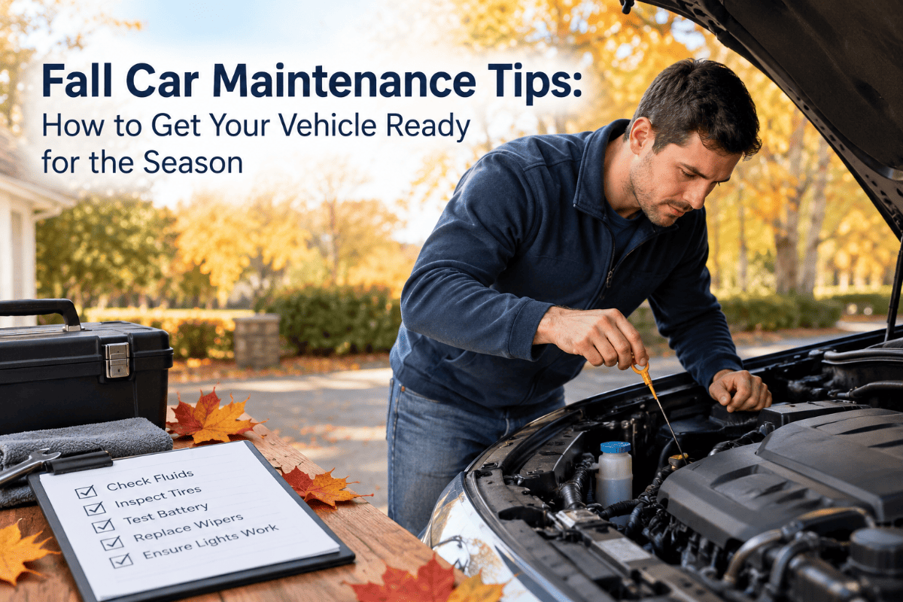
Get essential fall car maintenance tips to prepare for Michigan winter. Check your battery, tires, brakes, fluids, and more with this simple checklist.

Learn about different engine oil types, their benefits, and how to choose the right oil for your car to protect your engine and improve performance.
Discover the benefits of regular brake inspections, from safer stops to lower repair costs. Schedule a professional brake inspection in Portage, MI, today.
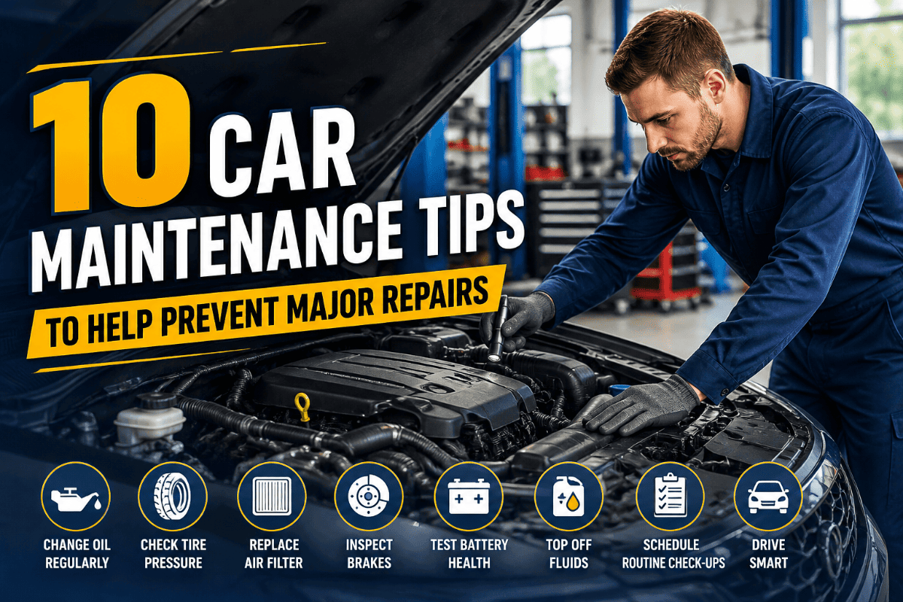
Follow these 10 car maintenance tips to prevent major repairs, improve vehicle safety, and save money with regular auto maintenance in Portage, MI.
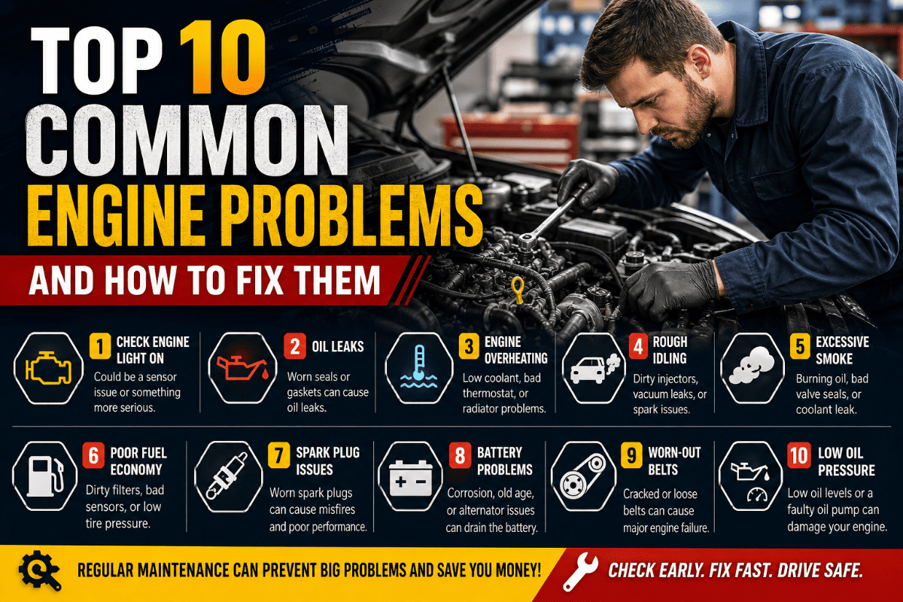
Discover 10 common engine problems, their warning signs, and practical fixes. Learn when to seek professional engine diagnostics to prevent costly repairs.
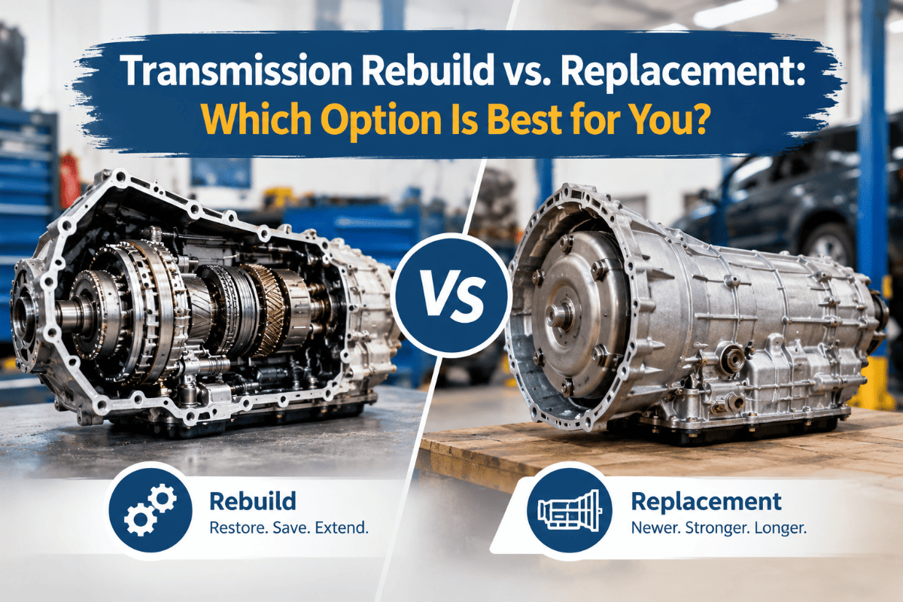
Compare transmission rebuild vs. replacement, including costs, benefits, repair time, and reliability. Get expert transmission service in Portage, MI.

Learn the common signs and causes of radiator problems, explore repair options, and discover when to seek professional help to prevent engine overheating and costly damage.

Learn how to extend the life of your transmission with essential maintenance tips, proper driving habits, and early warning signs to watch for.
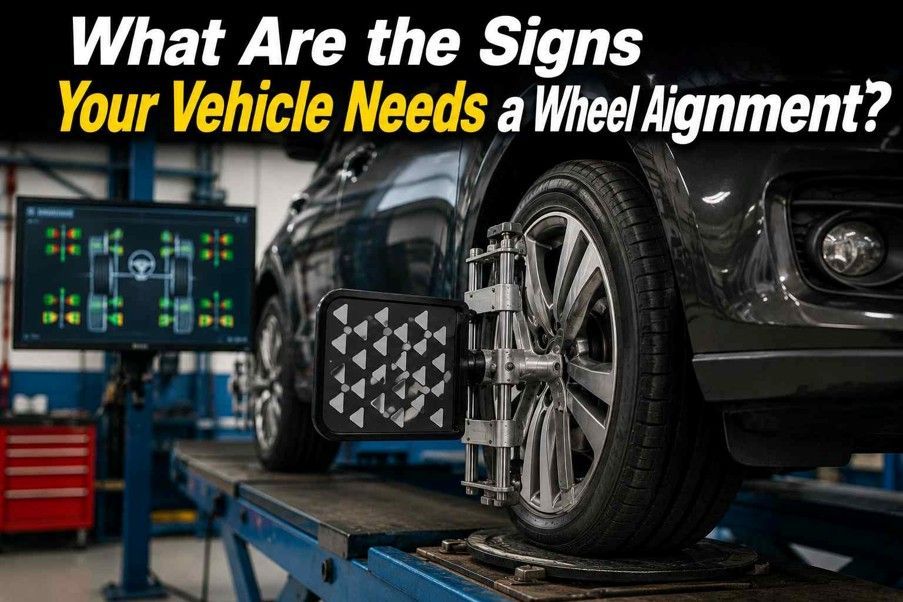
Learn the signs your vehicle needs a wheel alignment, including uneven tire wear, pulling, steering issues, and an off-center steering wheel.