Muffler Man of Portage has proudly served Portage, Kalamazoo, Oshtemo, and nearby Michigan communities since 2002. As a family-owned auto repair shop, the team specializes in mufflers, exhaust systems, brakes, suspension repair, diagnostics, and general automotive services. With certified technicians, advanced diagnostic tools, and a commitment to honest service, Muffler Man of Portage delivers reliable automotive repair solutions backed by years of hands-on industry experience
```
Engine repair vs. engine replacement is a choice between fixing a failed part and swapping the whole engine. Repair means a technician fixes or replaces specific parts, such as a gasket, sensor, or water pump. Replacement means the old engine comes out and another one goes in. Repair usually fits small, isolated problems. Replacement fits severe internal damage.
Your vehicle’s age, mileage, and condition also matter. So does cost. The best way to choose is a full diagnosis, not a guess from symptoms alone. A trained technician can test the engine and explain your options in plain words. Then you can compare costs, weigh your long-term plans, and pick the path with the best value for you.
What Is the Difference Between Engine Repair and Engine Replacement?
Both choices aim to get you back on the road. They just take different paths.
Engine repair means fixing or replacing specific parts while the engine stays in your vehicle. A technician finds the failed part, such as a leaking gasket or a bad sensor. Then they fix it. Think of it like patching a tire instead of buying a new one. The rest of the engine keeps working.
How Does Engine Replacement Work?
In auto engine replacement, a shop removes the old engine and installs another one. The new engine can be used, remanufactured, or brand new. A used engine costs less but has an unknown history. A remanufactured engine is rebuilt to factory standards and often has a warranty. A new engine gives the most peace of mind, but it costs the most. The technician also moves over needed parts, refills fluids, and tests the vehicle.
Common Reasons an Engine May Need Repair or Replacement
Watch for these signs of engine damage:
● Oil leaks or heavy oil use: Low oil wears parts fast, so a small leak should not wait.
● Overheating: Extreme heat can warp metal parts and ruin gaskets.
● Loss of engine power: Weak acceleration often points to fuel, air, or compression trouble.
● Knocking or tapping noises: These sounds can mean worn parts or low oil pressure.
● A check engine light that stays on: The computer has stored a fault code worth checking.
● Cylinder or compression problems: Weak compression means a cylinder is not sealing well.
● Internal engine damage: Worn or broken inner parts can make a simple fix unlikely.
● Severe engine failure: A seized or badly damaged engine often needs replacement.
How Do You Decide Between Engine Repair and Engine Replacement?
Your symptoms tell part of the story. A diagnosis tells the rest. A vehicle can show serious warning signs without needing a new engine. In the same way, severe internal damage can make a big repair a poor use of money. This is why the decision should start with testing. A reliable engine diagnostic service finds the real cause first. Next, the technician sorts the problem into two groups. One group is a repairable part. The other is wider internal damage.
After that, the shop compares costs with your vehicle’s value and expected life. This order keeps you from paying for a repair you do not need. It also keeps you from spending thousands on a repair likely to fail. The timeline below shows how the process works, from the first warning sign to the final choice.
Engine Repair vs. Replacement Decision Timeline
| Step | What Happens |
|---|---|
| Warning Signs Appear | The vehicle may show unusual noise, overheating, reduced power, smoke, heavy oil use, or a check engine light. |
| Initial Inspection | A technician reviews the symptoms and the vehicle’s history. |
| Engine Diagnostics | Testing equipment and inspection methods point to the source of the problem. |
| Damage Assessment | The technician decides if one part is at fault or if the damage runs deeper. |
| Repair Evaluation | If the engine is still structurally sound, fixing the affected part may work. |
| Replacement Evaluation | If damage is widespread, replacement may be a better option than major repairs. |
| Cost Comparison | Repair and replacement costs are weighed against the vehicle’s condition and remaining life. |
| Final Decision | You choose based on the diagnosis, vehicle condition, budget, and long-term needs. |
The Science Behind Engine Diagnosis
An engine is a team of moving, electrical, and fluid parts. They all depend on each other. When one part slips, the whole engine can feel it. A good technician looks for the source of a symptom, not just the symptom itself. For example, a check engine light does not mean you need a new engine. It only means the computer saw a fault. Compression testing can show how well each cylinder holds pressure. Cooling problems can cause overheating, and weak lubrication can speed up wear. Both can hurt the engine over time.
Internal damage also changes the choice. If the inner parts are badly worn, repair may not be practical. A full diagnosis helps prevent an engine swap you did not need. It also looks at your vehicle’s overall condition before a big spending decision.
Muffler Man of Portage states that its certified technicians use advanced tools and diagnostics to accurately find and repair vehicle issues. Knowing the signs of engine damage early also helps catch trouble before it spreads.
Benefits and Limitations of Engine Repair and Replacement
Both auto engine repair and replacement have strengths and limits. Here is how they compare.
Benefits of Engine Repair
● Fixes one problem: You do not replace the whole engine.
● Costs less for limited damage: A small part is cheaper than a new engine.
● Keeps your current engine: Your vehicle stays as it was built.
● Restores performance: The right repair can bring back smooth power.
● Suits vehicles in good shape: A solid car deserves a targeted fix.
● Avoids an unneeded swap: You skip a large bill.
Limitations of Engine Repair
● Major internal damage: Too many broken parts can make repair impractical.
● Rising costs: Each damaged part adds labor and parts to the bill.
● Leftover wear: The rest of the engine may still be worn.
● Older vehicles: The repair bill may not make sense for the car’s value.
● Long-term reliability: It depends on the condition of the engine and vehicle.
Benefits of Engine Replacement
● Solves severe damage: A fresh engine fixes widespread internal failure.
● Can beat many repairs: One swap may cost less than a long list of fixes.
● Gets you moving again: It works when the old engine is beyond saving.
● Fits long-term plans: It makes sense if you plan to keep the car for years.
● Covers failed major parts: You replace them all at once.
Limitations of Engine Replacement
● Higher cost: It usually costs more than a minor repair.
● Heavy labor: The job takes real time and skill.
● Right fit needed: The new engine must match your vehicle.
● Other problems may remain: The brakes, transmission, or suspension may still need work.
● Vehicle value matters: Weigh the bill against what the car is worth.
How to Know When Your Engine Needs Repair or Replacement
Good prep makes your visit faster and your diagnosis more accurate. Use these tips before and after your visit to an auto repair shop.
Before Your Appointment
● Write down noises, smells, smoke, or changes in power: Small details help the technician find the cause faster.
● Note when the problem started: Tell the shop if it is getting worse.
● Record whether the check engine light is on: This gives the technician a starting point.
● Share recent repairs and maintenance: Past work can explain current symptoms.
● Stop driving if the engine overheats badly: Driving further can cause costly damage.
● Bring mileage and service records: A clear history leads to smarter choices.
Aftercare Tips
Good aftercare protects any auto engine repair or replacement.
● Follow the maintenance schedule: Regular care protects your investment.
● Watch oil levels and warning lights: Early alerts stop bigger problems.
● Fix overheating or odd noises fast: Delays can turn small issues into large ones.
● Use the correct fluids and parts: The wrong ones can harm a freshly serviced engine.
● Follow your technician’s advice: Break-in tips matter after major work.
● Return for follow-up service: Rechecks catch leaks or loose parts early.
Does Engine Repair Take Less Time Than Engine Replacement?
Time depends on the cause, the work needed, and parts availability. It also depends on vehicle condition and whether the engine must come out. A limited repair may take less time than a full engine swap. Still, each case needs a proper diagnosis first.
Engine Repair vs. Engine Replacement: Which Is Right for You?
Both paths are valid. The right one depends on how bad the problem is. It also depends on your vehicle’s age, mileage, and overall condition. Repair cost, replacement cost, and your long-term plans matter too.
Think of engine repair vs. engine replacement like fixing a leaky roof or building a new one. A small leak calls for a patch. A rotted frame calls for a rebuild. Your technician can show you which case you have.
Shops that offer car engine replacement services can also quote both paths side by side. This lets you see the full picture before you spend. The table below sums up the main differences.
| Feature | Engine Repair | Engine Replacement |
|---|---|---|
| Primary Goal | Fix the specific engine problem | Replace the existing engine |
| Approach | Repair affected parts or systems | Remove the old engine and install another |
| Best For | Limited or repairable problems | Severe or widespread damage |
| Cost | Depends on the part and labor | Includes engine and installation costs |
| Repair Scope | Usually focused on one problem | Major job with engine removal and installation |
| Vehicle Condition | Fits when the engine is still usable | Fits when the engine is no longer practical to repair |
| Time Required | Varies by repair | Depends on engine availability and installation |
| Long-Term Approach | Extends the life of your current engine | Gives you a different engine when needed |
| Professional Evaluation | Recommended before choosing a repair | Essential before deciding on full replacement |
Is Engine Repair or Replacement Right for Your Vehicle?
Your answer depends on the damage, the car, and your goals. These checklists can guide your thinking.
You May Benefit From Engine Repair If…
● The problem is limited to one part: A small fault rarely needs a new engine.
● The engine has no extensive internal damage: Healthy inner parts are worth keeping.
● The vehicle is otherwise in good shape: A strong car justifies a targeted fix.
● The cost is fair compared with the vehicle’s value: This keeps the repair worthwhile.
● You want to keep your existing engine: Repair lets you do exactly that.
Consider Professional Evaluation for Engine Replacement If…
● The engine has extensive internal damage: Widespread damage can repair costly.
● Major engine parts have failed: Several failures often point to a worn-out engine.
● Repair would be impractical or too costly: A swap may be the better value.
● The vehicle is suited for continued ownership: A sound car can earn back the cost.
● Replacement is the better long-term option: Auto engine replacement can bring steady reliability.
Read More : Why Is My Car Losing Power While Accelerating?
Common Engine Repair and Replacement Myths and Facts
Myths can lead to costly mistakes. Here are five worth clearing up.
| Myth | Fact |
|---|---|
| A check engine light always means a new engine | Many problems can trigger it. Testing finds the true cause. |
| A noisy engine always needs replacement | Noise has many sources. The fix depends on the cause and severity. |
| Engine repair is always cheaper than replacement | Minor repairs cost less. Extensive damage can make replacement more practical. |
| A new engine fixes every problem | It fixes the engine only. Other systems may still need work. |
| Symptoms alone can settle the choice | A professional inspection gives a far more reliable answer. |
Need Help Deciding Between Engine Repair and Replacement?
Not sure which path fits your vehicle? We can help. At Muffler Man of Portage, we have served our community for over 20 years. As a trusted auto repair shop, we offer certified technicians and advanced diagnostics. Here is what you can expect:
● A full vehicle inspection
● An engine diagnostic service to find the root cause
● Clear repair and replacement options
● Transparent recommendations
● Financing options
● A 24-month/24,000-mile nationwide warranty on qualifying services
Schedule an appointment today, and we will help you decide. Call (269) 323-1980 to get started.
FAQs
How is engine repair different from engine replacement?
Repair fixes or replaces specific failed parts while the original engine stays in the vehicle. Replacement removes the whole engine and installs a used, remanufactured, or new one. Repair suits limited problems. Replacement suits severe internal damage, repeated failures, or cases where repair costs make little sense.
How can you tell if your engine needs repair or replacement?
Only a professional diagnosis can tell for sure. Warning signs include knocking, overheating, power loss, smoke, and a check engine light. A technician tests the engine, finds the cause, and checks the extent of damage. Then they compare repair and replacement options for your vehicle.
Is it cheaper to repair an engine or replace it?
Repair usually costs less when the problem is limited to one part or system. Replacement can cost more upfront but may save money when many parts are damaged. Costs vary by vehicle, parts, and labor, so ask for written estimates for both options before deciding.
What are the signs that an engine may need repair?
Common signs include oil or coolant leaks, rough idling, misfires, a lit check engine light, lower fuel economy, and occasional overheating. These often point to a repairable part. Early service helps you avoid larger damage and higher bills. Do not keep driving if the temperature gauge spikes.
What are the signs of severe engine damage?
Warning signs include loud knocking, heavy smoke, rapid oil loss, low compression, and oil mixing with coolant. Repeated overheating and major power loss also raise concern. If you notice these signs, stop driving and call a shop. Further driving can turn damage into total failure.
Can a check engine light mean the engine needs replacement?
Rarely. A check engine light only means the computer stored a fault code. The cause could be a loose gas cap, a bad sensor, or a misfire. Proper diagnostic testing finds the real issue. Replacement becomes a topic only when testing shows severe internal damage.
How long does engine repair or replacement take?
Time depends on the cause, parts availability, and the vehicle. A small repair can take a few hours to a day or two. Replacement often takes several days or longer because the engine must be removed, swapped, and tested. Your shop can give a clearer timeline after diagnosis.
Is engine replacement worth it on an older vehicle?
It can be, if the rest of the vehicle is solid. Check the body, transmission, suspension, and rust. If the car is reliable otherwise and you plan to keep it for years, replacement may add value. If many systems are worn, the money may be better spent elsewhere.
Can diagnostics determine whether an engine needs replacement?
Yes. Diagnostic testing reveals the source of the problem and how far the damage goes. Scan tools, compression tests, and visual inspections show whether parts are repairable or the engine is beyond saving. A written estimate then helps you compare repair and replacement costs with confidence.
What should I consider before replacing an engine?
Weigh the repair quote against your vehicle’s value, age, mileage, and maintenance history. Consider how long you plan to keep it and the engine type, such as used, remanufactured, or new. Ask about warranty coverage, labor, and any other repairs the vehicle may need.

Compare transmission rebuild vs. replacement, including costs, benefits, repair time, and reliability. Get expert transmission service in Portage, MI.

Learn about different engine oil types, their benefits, and how to choose the right oil for your car to protect your engine and improve performance.
Get essential fall car maintenance tips to prepare for Michigan winter. Check your battery, tires, brakes, fluids, and more with this simple checklist.
Discover the benefits of regular brake inspections, from safer stops to lower repair costs. Schedule a professional brake inspection in Portage, MI, today.
Follow these 10 car maintenance tips to prevent major repairs, improve vehicle safety, and save money with regular auto maintenance in Portage, MI.
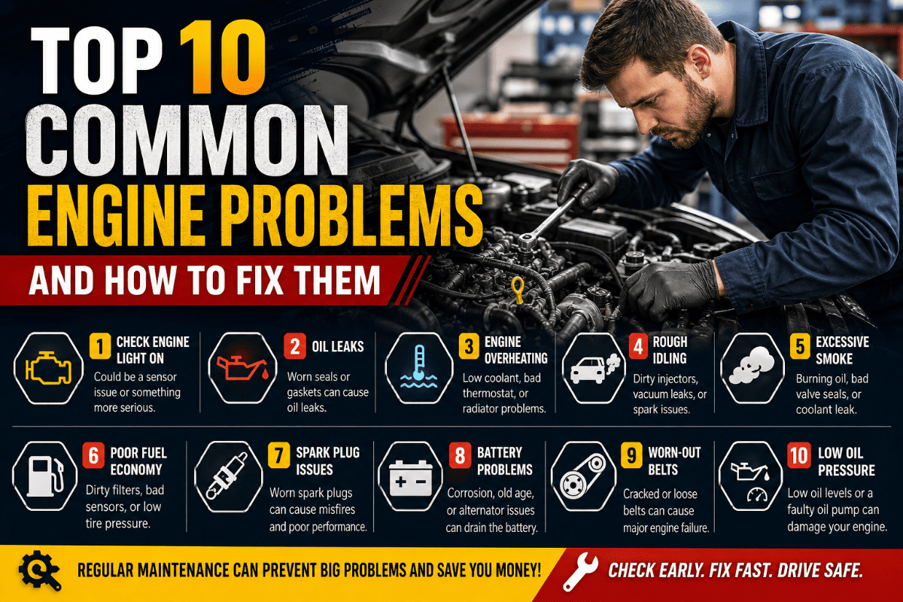
Discover 10 common engine problems, their warning signs, and practical fixes. Learn when to seek professional engine diagnostics to prevent costly repairs.

Learn the common signs and causes of radiator problems, explore repair options, and discover when to seek professional help to prevent engine overheating and costly damage.

Learn how to extend the life of your transmission with essential maintenance tips, proper driving habits, and early warning signs to watch for.
Learn the signs your vehicle needs a wheel alignment, including uneven tire wear, pulling, steering issues, and an off-center steering wheel.
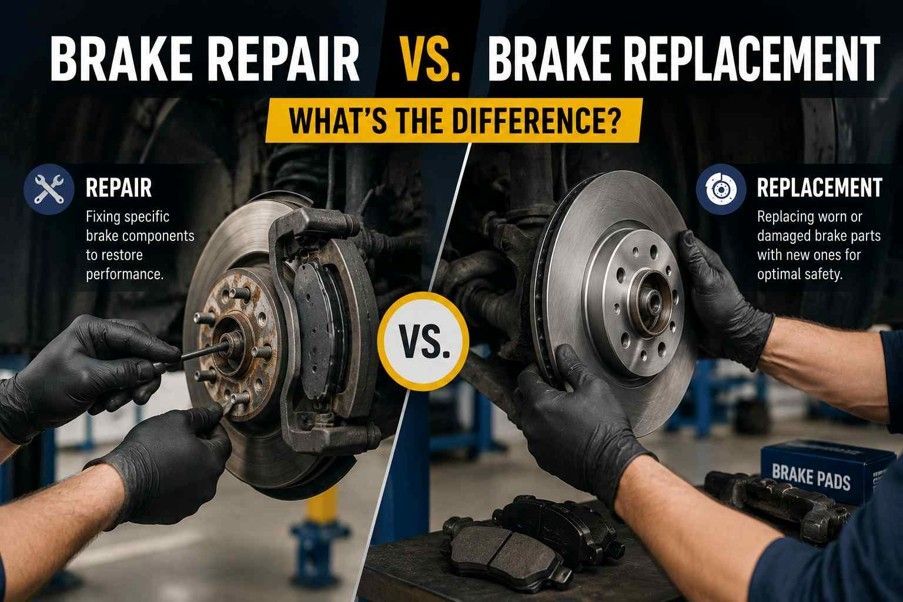
Learn the difference between brake repair and brake replacement, when each option may be needed, and the warning signs that your vehicle's brakes need attention.