Muffler Man of Portage has proudly served Portage, Kalamazoo, Oshtemo, and nearby Michigan communities since 2002. As a family-owned auto repair shop, the team specializes in mufflers, exhaust systems, brakes, suspension repair, diagnostics, and general automotive services. With certified technicians, advanced diagnostic tools, and a commitment to honest service, Muffler Man of Portage delivers reliable automotive repair solutions backed by years of hands-on industry experience
A shaking steering wheel is usually caused by an unbalanced tire or wheel, tire damage, brake problems, wheel alignment issues, or worn steering and suspension components. The cause often depends on when the shaking occurs—at highway speeds, while braking, during acceleration, or when turning. A professional inspection can identify the underlying problem before it affects safety or vehicle performance.
Quick Answer: Why Is My Steering Wheel Shaking?
The most common potential causes of a shaking steering wheel include:
- Unbalanced wheels or tires
- Tire damage or uneven tire wear
- Wheel alignment problems
- Bent or damaged wheels
- Brake rotor or other brake-system problems
- Worn suspension components
- Loose or incorrectly torqued lug nuts
- Worn wheel bearings
- Steering-system problems
- CV joint or axle problems
- Sticking brake calipers
The timing of the vibration can help narrow down the possibilities. Shaking at certain highway speeds often points toward a tire or wheel problem. Vibration primarily during braking can indicate a brake-system issue. Shaking during acceleration or turning can point toward drivetrain, bearing, steering, or suspension problems.
These are diagnostic clues rather than definitive diagnoses. A vehicle inspection is necessary to determine which component is actually responsible.
When Does Your Steering Wheel Shake?
Paying attention to exactly when the vibration occurs can provide useful information before the vehicle is inspected.
Steering Wheel Shaking at Highway Speeds
If the vibration becomes noticeable as vehicle speed increases, possible causes include:
- Wheel and tire imbalance
- Tire damage
- Bent wheel
- Uneven tire wear
- Wheel-bearing wear
- Suspension problems
A tire and wheel assembly that is out of balance can produce vibration at certain speeds. The exact speed at which it becomes noticeable varies by vehicle and the severity of the imbalance.
Steering Wheel Shaking When Braking
If the steering wheel begins vibrating when you apply the brakes, the braking system should be evaluated.
Potential causes include:
- Brake rotor runout
- Disc thickness variation
- Uneven friction-material deposits
- Brake caliper problems
- Worn suspension components
- Wheel or tire problems
The term "warped brake rotor" is often used to describe brake vibration, but not every braking vibration is caused by a physically warped rotor. Inspection and measurement are needed to identify the actual problem.
Steering Wheel Shaking During Acceleration
A vibration that occurs mainly when accelerating can have a different cause from vibration at steady highway speeds.
Possible sources include:
- Worn CV joints
- Damaged drive axles
- Drivetrain components
- Engine or transmission mounts
- Other vehicle-specific drivetrain problems
Pay attention to whether the vibration disappears when you stop accelerating. That information can help a technician narrow down the possible source.
Steering Wheel Shaking When Turning
If the vibration or related noise becomes more noticeable while turning, possible causes include:
- Wheel-bearing problems
- CV joint wear
- Steering-component problems
- Suspension issues
- Tire or wheel problems
A clicking sound during tight turns can be an important clue, particularly on some front-wheel-drive vehicles.
Steering Wheel Shaking at All Speeds
A vibration that occurs under several driving conditions may involve the tire, wheel, suspension, steering, or wheel-end assembly.
A sudden or severe vibration should be treated more seriously, particularly if it is accompanied by loose steering, unusual noises, visible tire damage, or difficulty controlling the vehicle.
1. Unbalanced Wheels or Tires
A wheel and tire assembly needs to rotate smoothly. If its weight is not distributed evenly, the imbalance can create vibration as the assembly rotates.
Drivers often notice this type of vibration at certain speeds. It may become more noticeable as speed increases.
A tire balancing service measures the wheel and tire assembly and uses balancing weights to correct uneven weight distribution.
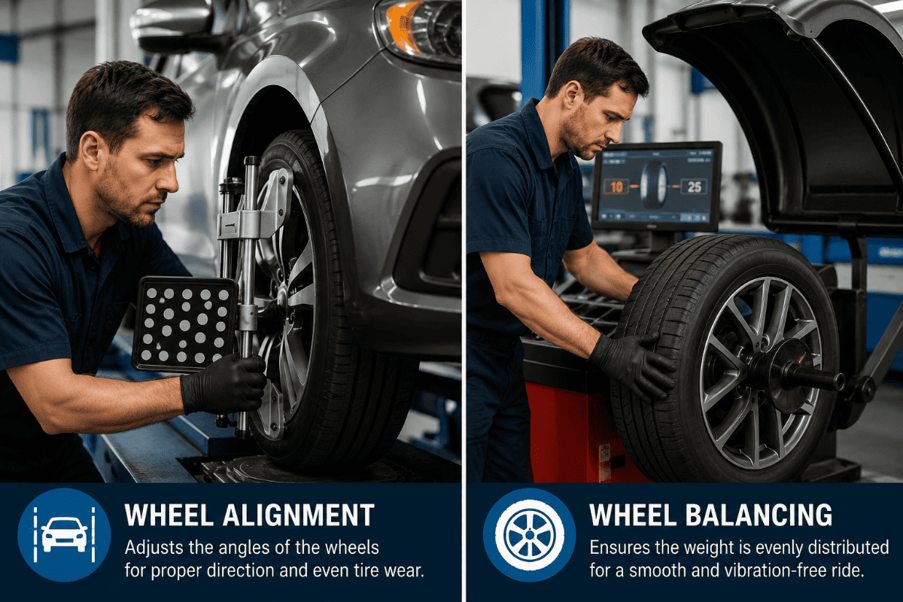
Wheel balancing is different from wheel alignment. Balancing addresses the distribution of weight around the rotating assembly, while alignment concerns the angles of the wheels relative to the vehicle.
2. Tire Damage or Uneven Tire Wear
Tires can cause steering-wheel vibration even when the wheel is properly balanced.
Potential tire-related causes include:
- Uneven tread wear
- Internal belt damage
- Tread separation
- Flat spots
- Sidewall damage
- Bulges or bubbles
- Incorrect tire pressure
- Irregular wear caused by suspension or alignment problems
Some tire problems are easy to see, while internal damage may not be visible during a basic visual inspection.
A tire with a bulge, significant structural damage, or suspected tread separation should be evaluated promptly. Continuing to drive on a severely damaged tire can create a serious safety risk.
3. Wheel Alignment Problems
Wheel alignment involves setting the wheel angles according to the vehicle manufacturer's specifications.
When alignment is outside the recommended range, drivers may notice:
- Vehicle pulling to one side
- Steering wheel sitting off-center
- Uneven tire wear
- Changes in handling
- Abnormal steering response
Alignment problems can contribute to handling and tire-wear issues, but not every steering-wheel vibration is caused by alignment.
If vibration occurs together with pulling or uneven tire wear, an alignment inspection may be appropriate.
Wheel Alignment vs. Wheel Balancing
Wheel alignment and wheel balancing are often confused because both can be associated with steering or tire complaints. However, they correct different problems.
Wheel balancing addresses uneven weight distribution in the tire and wheel assembly. It is commonly associated with vibration that occurs at certain speeds.
Wheel alignment adjusts the wheel angles to the vehicle manufacturer's specifications. Alignment problems are more commonly associated with pulling, an off-center steering wheel, and uneven tire wear.
A vehicle can have an alignment problem, a balancing problem, or both. A proper inspection helps determine which service is actually needed.
4. Bent or Damaged Wheels
Potholes, curbs, and other road impacts can bend or damage a wheel.
Some wheel damage is easy to see, while other problems require specialized inspection equipment.
A damaged wheel can contribute to:
- Steering-wheel vibration
- Air-pressure loss in some situations
- Uneven tire wear
- Handling changes
- Difficulty balancing the tire and wheel assembly
If the steering wheel started shaking immediately after hitting a pothole or curb, have the affected tire and wheel inspected.
5. Brake Rotor or Brake-System Problems
Steering-wheel vibration that occurs primarily during braking deserves attention.
Possible causes include:
- Rotor runout
- Disc thickness variation
- Uneven friction-material deposits
- Brake overheating
- Caliper problems
- Improper component installation
- Related suspension or wheel-end problems
The phrase "warped rotors" is commonly used when discussing brake vibration, but it does not describe every possible cause.
A technician may need to inspect and measure the brake components to determine whether the rotor, pads, caliper, or another component is responsible.
If your steering wheel shakes every time you brake, especially if the vibration is becoming more pronounced, arrange for a brake inspection.
Depending on the diagnosis, brake repair services may include brake pad replacement, rotor service or replacement, caliper service, brake fluid service, or other brake-system repairs.
6. Worn or Damaged Suspension Components
The suspension system helps maintain tire contact with the road while controlling the vehicle's movement.
Worn or damaged suspension components can allow excessive movement and affect steering feel, handling, and stability.
Potential sources include:
- Ball joints
- Tie-rod ends
- Control-arm bushings
- Struts
- Shock absorbers
- Other suspension components
Different suspension failures can produce different symptoms. For example, worn tie-rod ends may contribute to steering looseness, while worn control-arm bushings can affect suspension movement during braking or acceleration.
If steering vibration is accompanied by clunking, wandering, uneven tire wear, or changes in handling, the suspension should be inspected.
7. Loose or Incorrectly Torqued Lug Nuts
Lug nuts secure the wheel to the vehicle hub. If they are not installed correctly or tightened to the required torque, the wheel may not be securely seated.
A loose wheel can produce vibration and represents a potentially serious safety concern.
If the shaking began shortly after a tire change, wheel installation, or other wheel-related service, have the wheel installation and lug-nut torque checked promptly.
If you suspect that a wheel is loose, avoid continuing to drive until the problem has been properly addressed.
8. Worn Wheel Bearings
Wheel bearings allow the wheel and hub assembly to rotate smoothly.
As a bearing wears, it may produce:
- Humming
- Growling
- Grinding
- Wheel looseness
- Vibration
- Changes in noise while turning
A worn wheel bearing does not always cause steering-wheel vibration, but it should be considered when vibration occurs alongside speed-related noise or a change in noise while cornering.
Because wheel bearings are part of the wheel-end assembly, suspected bearing problems should be professionally inspected.
9. Steering-System Problems
Problems involving the steering system can affect steering feel, response, and vehicle control.
Depending on the vehicle, possible sources include:
- Tie-rod ends
- Steering linkage
- Steering rack
- Steering gear
- Power-steering components
- Hydraulic components on vehicles equipped with hydraulic power steering
Steering problems may produce looseness, unusual noise, inconsistent steering effort, or vibration.
Low power-steering fluid, where applicable, is more commonly associated with increased steering effort or whining than with a typical speed-related steering-wheel vibration. The underlying problem should therefore be diagnosed rather than assuming the fluid level is responsible.
10. CV Joint or Axle Problems
Front-wheel-drive and many all-wheel-drive vehicles use CV joints and drive axles to transfer power to the wheels.
A worn or damaged CV joint can produce symptoms such as:
- Clicking during turns
- Vibration during acceleration
- Grease around a damaged CV boot
- Shaking that becomes more noticeable under acceleration
A vibration that occurs primarily during acceleration should be evaluated differently from a vibration that occurs at a specific cruising speed.
Early diagnosis can help prevent additional drivetrain damage.
11. Sticking Brake Calipers
A properly functioning brake caliper should release the brake pad from the rotor when the driver releases the brake pedal.
If a caliper does not release properly, it can create excessive friction and heat.
Possible symptoms include:
- Vehicle pulling to one side
- Uneven brake-pad wear
- Burning smell
- Excessive heat around one wheel
- Reduced fuel economy
- Brake vibration
- Premature rotor or pad wear
A sticking caliper should be inspected promptly because continued friction can damage additional brake components.
What Suspension Problems Can Cause Steering Wheel Shaking?
Several steering and suspension components can contribute to vibration, looseness, or instability.
Worn Tie-Rod Ends
Tie-rod ends connect the steering system to the wheel assembly. Excessive play can affect steering response and vehicle stability.
Worn Ball Joints
Ball joints allow controlled movement between suspension components and the steering knuckle. Excessive wear can create looseness, clunking, and handling problems.
Damaged Control-Arm Bushings
Worn bushings can allow excessive suspension movement, particularly during braking, acceleration, or changes in direction.
Worn Struts or Shock Absorbers
Worn dampers can reduce the vehicle's ability to control suspension movement and may contribute to poor handling, tire wear, and instability.
Because suspension components work together, replacing one part based solely on a vibration symptom may not resolve the underlying problem.
What Does the Type of Vibration Tell You?
The conditions under which the vibration occurs can provide useful diagnostic clues.
| When the Steering Wheel Shakes | Possible Causes |
|---|---|
| At certain highway speeds | Wheel imbalance, tire problems, bent wheel, wheel-bearing or suspension issues |
| Mainly while braking | Brake-system problem, rotor runout, disc thickness variation, suspension or wheel-end issue |
| During acceleration | CV joint, axle, or drivetrain issue |
| During turns | Wheel bearing, CV joint, steering, or suspension problem |
| After hitting a pothole | Bent wheel, damaged tire, alignment, or suspension problem |
| At multiple speeds | Tire, wheel, suspension, steering, or wheel-end problem |
| Shortly after wheel service | Wheel installation, lug-nut torque, balance, or tire-related problem |
These are starting points rather than diagnoses. Similar symptoms can have different causes, so persistent or severe vibration should be professionally evaluated.
How Do Technicians Diagnose Steering Wheel Vibration?
Finding the source of a vibration requires more than replacing the component that seems most likely to be responsible.
Depending on the symptoms, a technician may:
- Ask when the vibration occurs.
- Check tire pressure and tire condition.
- Inspect the tread for uneven wear or damage.
- Check the wheels for bends or impact damage.
- Test wheel and tire balance.
- Inspect wheel installation and lug-nut torque.
- Check alignment when the symptoms indicate it.
- Inspect steering and suspension components for looseness.
- Check wheel bearings.
- Inspect brake components when vibration occurs during braking.
- Evaluate CV joints and axles when vibration occurs during acceleration.
- Road-test the vehicle when appropriate.
Certified auto repair mechanics can use the reported symptoms, inspection findings, and vehicle-specific specifications to determine which components require further testing or repair.
This diagnostic approach can help avoid unnecessary parts replacement and focus the repair on the actual source of the vibration.
How a Professional Inspection Helps Identify the Cause
A steering-wheel vibration cannot always be diagnosed from one symptom alone.
For example, a vibration at highway speed could result from a wheel imbalance, but a damaged tire, bent wheel, wheel bearing, or suspension issue can produce similar sensations.
Likewise, vibration during braking may involve the brake rotor, brake pads, caliper, wheel assembly, or suspension.
A professional inspection brings these possibilities together by considering the vehicle's symptoms, condition, and manufacturer specifications.
For Muffler Man Portage, this type of diagnostic approach is important because the objective is not simply to make the vibration temporarily disappear. The underlying cause should be identified so the appropriate repair can be recommended.
Can Wheel Alignment Fix Steering Wheel Vibration?
Wheel alignment can correct symptoms when an alignment problem is actually contributing to the issue. However, alignment alone will not fix every type of steering-wheel vibration.
If the underlying problem is an unbalanced tire, damaged tire, bent wheel, brake problem, worn suspension component, or wheel bearing, an alignment will not correct the root cause.
That is why a complete inspection is often more useful than automatically scheduling an alignment whenever the steering wheel shakes.
Is Steering Wheel Shaking Dangerous?
The level of risk depends on the underlying cause.
A minor wheel imbalance may primarily cause discomfort and accelerated tire wear. Other problems, such as a severely damaged tire, loose wheel, significant suspension wear, or certain steering-system failures, can create a serious safety concern.
Do not ignore a vibration that:
- Appears suddenly
- Becomes rapidly worse
- Is accompanied by loose steering
- Occurs with severe pulling
- Comes with grinding or clunking
- Appears after a major pothole impact
- Occurs with visible tire damage
- Is accompanied by suspected loose lug nuts
- Significantly affects vehicle control
If the vehicle feels unsafe to operate, avoid continuing to drive it and arrange for an appropriate inspection or recovery service.
When Should You Visit an Auto Repair Shop?
Schedule an inspection when the steering wheel continues to shake or when the vibration is accompanied by other symptoms.
A professional evaluation is particularly appropriate if:
- The vibration repeatedly occurs at highway speeds.
- The steering wheel shakes during braking.
- The vehicle pulls to one side.
- You notice uneven tire wear.
- You hear humming, grinding, or clunking.
- The steering feels loose.
- The vehicle vibrates during acceleration.
- The problem began after hitting a pothole or curb.
- The vibration started after tire or wheel service.
Early diagnosis can help identify problems before they cause additional tire, brake, suspension, or steering damage.
How to Reduce the Risk of Steering Wheel Vibration
Not every vibration can be prevented, but routine vehicle care can reduce the likelihood of some problems.
Helpful practices include:
- Maintain the recommended tire pressure.
- Inspect tires regularly for damage and uneven wear.
- Have tires balanced when necessary.
- Follow the vehicle manufacturer's alignment recommendations.
- Avoid potholes and road hazards when safely possible.
- Have unusual steering or suspension noises inspected.
- Do not ignore brake vibration.
- Check wheels after significant impacts.
- Follow recommended brake and suspension maintenance.
- Have the vehicle inspected before a long trip if you are already experiencing symptoms.
Routine maintenance can help identify developing problems before they affect handling or lead to more expensive repairs.
Steering and Suspension Inspection in Portage, MI
A shaking steering wheel can have several possible causes, and the appropriate repair depends on what an inspection reveals.
Muffler Man Portage can evaluate common sources of steering vibration involving tires, wheels, brakes, suspension components, and related steering systems. Drivers in Portage and nearby communities can arrange an inspection when vibration, unusual handling, or other steering-related symptoms develop.
The objective of a proper inspection is to identify the underlying problem and determine what repair, if any, is necessary.
Final Takeaway
A shaking steering wheel should not automatically be attributed to one specific problem. Tire and wheel issues, brake-system problems, suspension wear, wheel bearings, steering components, and drivetrain problems can all produce vibration
under different driving conditions.
The timing of the shaking provides one of the best diagnostic clues. Vibration at certain highway speeds often points toward a wheel or tire issue, while shaking during braking may indicate a brake-related problem. Vibration during acceleration or turning can point toward drivetrain, bearing, steering, or suspension components.
Because several conditions can produce similar symptoms, professional diagnosis is the safest way to determine the actual cause. Addressing the problem early can also help prevent additional tire, brake, suspension, or steering damage.
Automotive Information Disclaimer
This article provides general automotive information and is not a diagnosis of a specific vehicle. Steering, suspension, brake, and tire problems can have multiple causes. Vehicle-specific diagnosis and repair should be performed by a qualified automotive professional using the appropriate manufacturer specifications.
Frequently Asked Questions
Why does my steering wheel shake while driving?
The most common causes are unbalanced tires, wheel misalignment, worn suspension components, and bent wheels. The speed and situation when you feel the shaking can help narrow down which issue is at play.
Can unbalanced tires cause steering wheel vibration?
Yes. Unbalanced tires are one of the leading causes of steering wheel vibration, especially above 50 mph. A tire balancing service corrects this by redistributing weight evenly across each tire.
Why does my steering wheel shake when braking?
Shaking specifically during braking almost always points to warped brake rotors. The uneven surface causes the brake pads to vibrate when they make contact, and that movement travels up to the steering wheel.
Is it safe to drive with a shaking steering wheel?
It depends on the cause. A loose gas cap or minor imbalance may not be immediately dangerous. But loose lug nuts, worn suspension, or bad brakes are serious. Any persistent shaking should be inspected quickly.
Can bad wheel bearings cause steering wheel vibration?
Yes. A failing wheel bearing causes a grinding or humming noise that gets louder in turns, often accompanied by steering wheel vibration. Wheel bearings are a safety-critical part and should be replaced promptly.


Learn the common signs and causes of radiator problems, explore repair options, and discover when to seek professional help to prevent engine overheating and costly damage.

Learn how to extend the life of your transmission with essential maintenance tips, proper driving habits, and early warning signs to watch for.
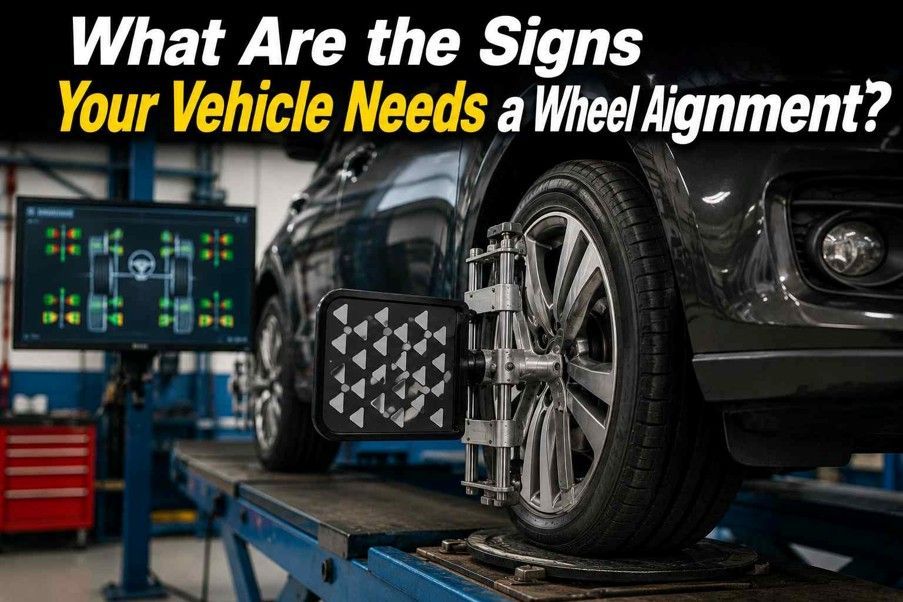
Learn the signs your vehicle needs a wheel alignment, including uneven tire wear, pulling, steering issues, and an off-center steering wheel.
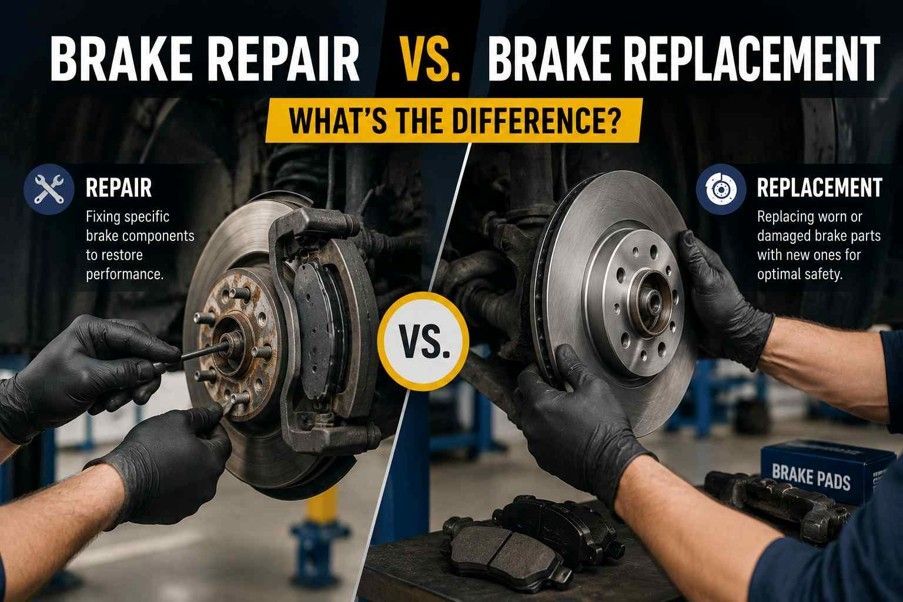
Learn the difference between brake repair and brake replacement, when each option may be needed, and the warning signs that your vehicle's brakes need attention.
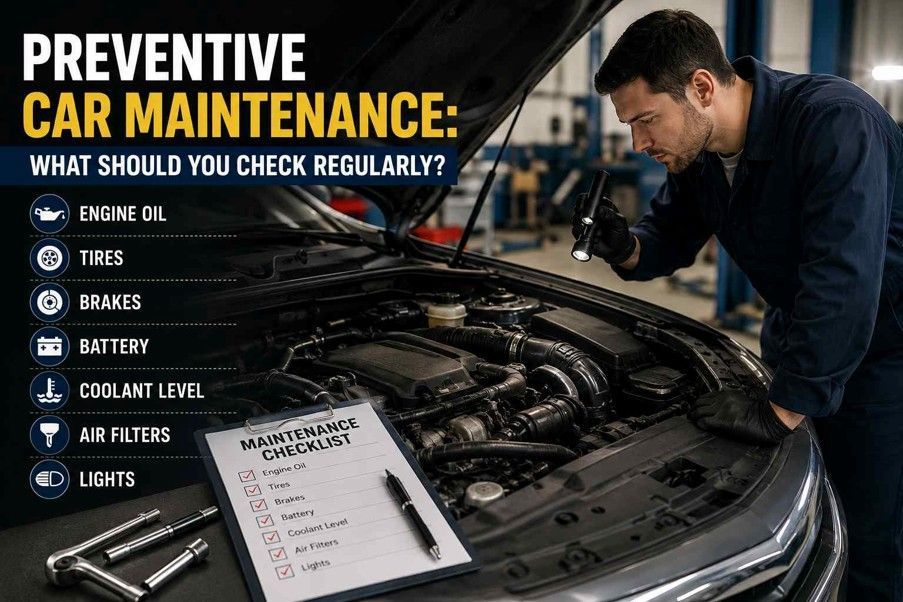
Learn what to check regularly with preventive car maintenance, including fluids, brakes, tires, batteries, and other key components to help avoid costly repairs.
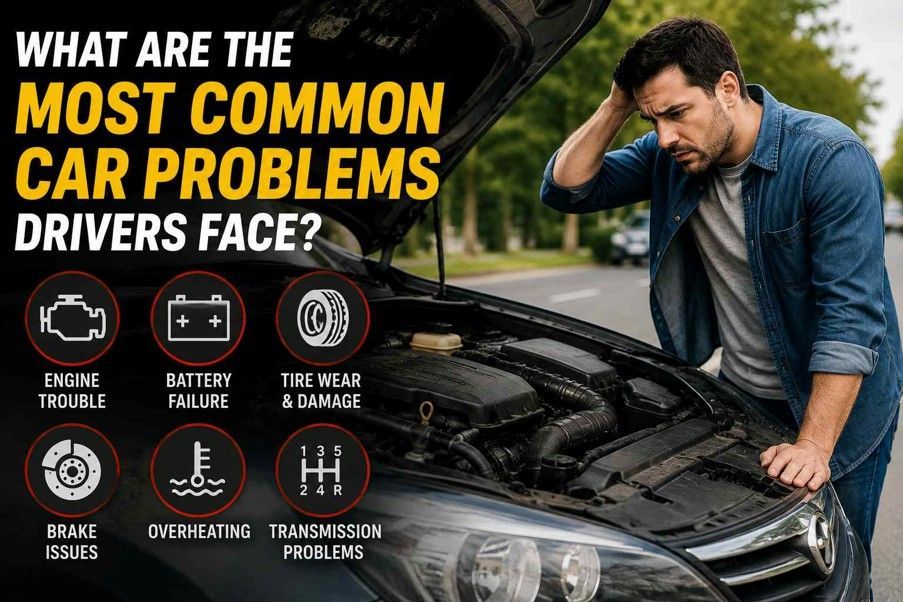
Discover the most common car problems drivers face, from brake and battery issues to engine, tire, and transmission problems, plus signs to watch for.

Why is your car losing power while accelerating? Learn the common causes, warning signs, and when to seek professional auto repair to restore performance.
Learn why your transmission is slipping, common causes, warning signs, repair options, and when to seek professional transmission repair.
Learn the difference between wheel alignment and wheel balancing, common warning signs, key benefits, and when each service is needed for safer driving.

Learn why brake inspections before long road trips are essential. Discover warning signs, inspection tips, and how to keep your vehicle safe on every drive.